Made for curious minds. Brought to you by QUONtech.
A LITTLE FRIENDLY COMPETITION
Your next high score starts here.
One good round. A name on the board. Someone to challenge.
All 13 games · Weekly and all-time top 25 One best score per browser identity. No account needed.
THE SCORE TO BEAT
Bubble Bloom
Loading scores…
For friendly competition: scores are player-submitted, not verified gameplay. Current boards start with the September 24 edition; previous scores remain in the two archive views. Updates can take up to a minute.
THE COLLECTION
Find your next obsession.
Choose your kind of challenge. Every game saves a personal best when browser storage is available.
AFTER THE HIGH SCORE / A PERSONAL HISTORY OF PLAY
Before the cloud. Before the feed. There was the feeling.
The tape loading. The disk clicking. That first impossible-looking world on the family television. Come back through the machines that made us curious.
34 machines and families · dates describe launches, not when Michael owned them.
Years follow the earliest launch shown; regional arrivals are noted on each card. Photographs may show a later hardware revision. Open a card for its source and photographer’s credit.
01
1980–1986
The television becomes a computer.
A keyboard, a cassette and a little curiosity. The early home-computer years made playing and programming neighbours. Competing machines developed their own look, sound and communities.
1980computers
1980 debut · international rollout followed
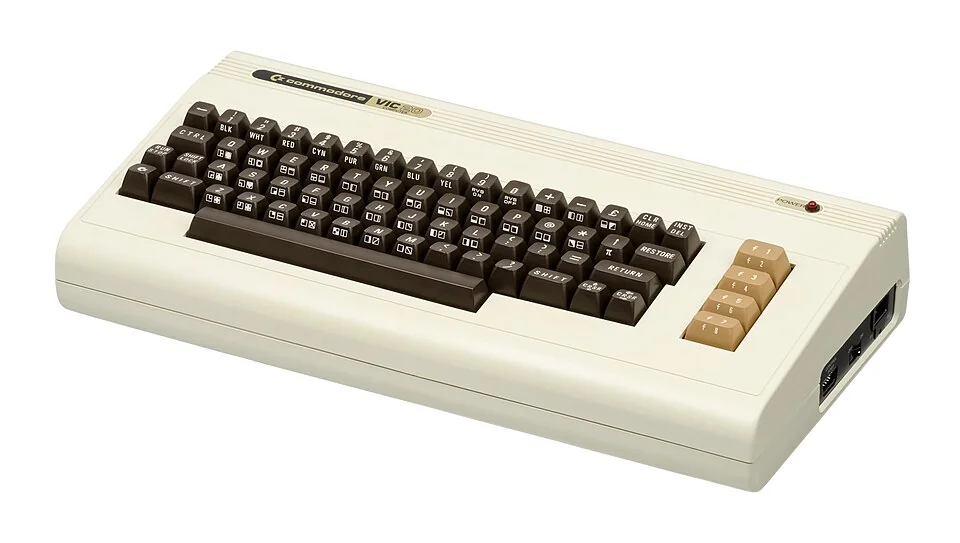
Commodore VIC-20 / VC 20
A whole future in a beige keyboard.
A television became a monitor. A keyboard became an invitation. This affordable home computer helped bring programming out of specialist rooms and into ordinary homes.
The story, the ritual & photo credit
A closer look
The VIC-20 was sold as the VC 20 in Germany. Its world was built around BASIC, cartridges and cassette storage. You could play a game—or start trying to understand how one was made.
Remember the feeling?
The ritual: type a listing, find the typo, try again. The error message was often the beginning of the lesson.
Photo: Evan-Amos · Public domain. Original & attribution ↗ Resized and converted to WebP; no hardware features altered.
1981computers
5 March 1981 · UK
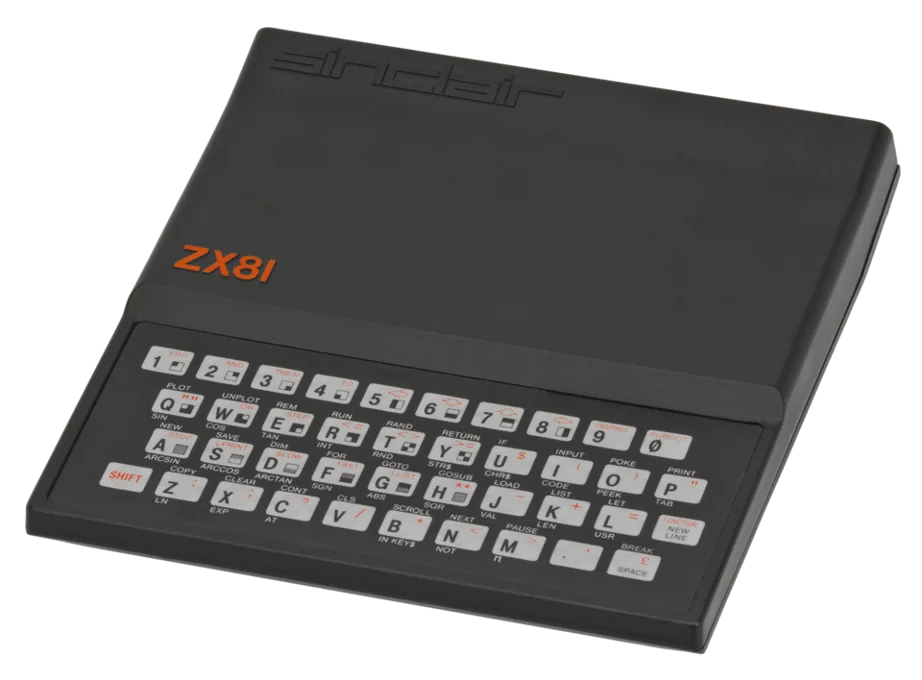
Sinclair ZX81
Small machine. Enormous possibilities.
A flat membrane keyboard and monochrome display made the ZX81 unmistakable. Computing could be something you bought for yourself, learned at home and explored one command at a time.
The story, the ritual & photo credit
A closer look
The standard machine offered just 1 KB of RAM. Memory expansion changed what it could do, but the basic proposition was already radical: an inexpensive computer that let its owner write programs.
Remember the feeling?
Imagine fitting an idea into a kilobyte. Constraints were part of the creative process, long before anyone called them a design principle.
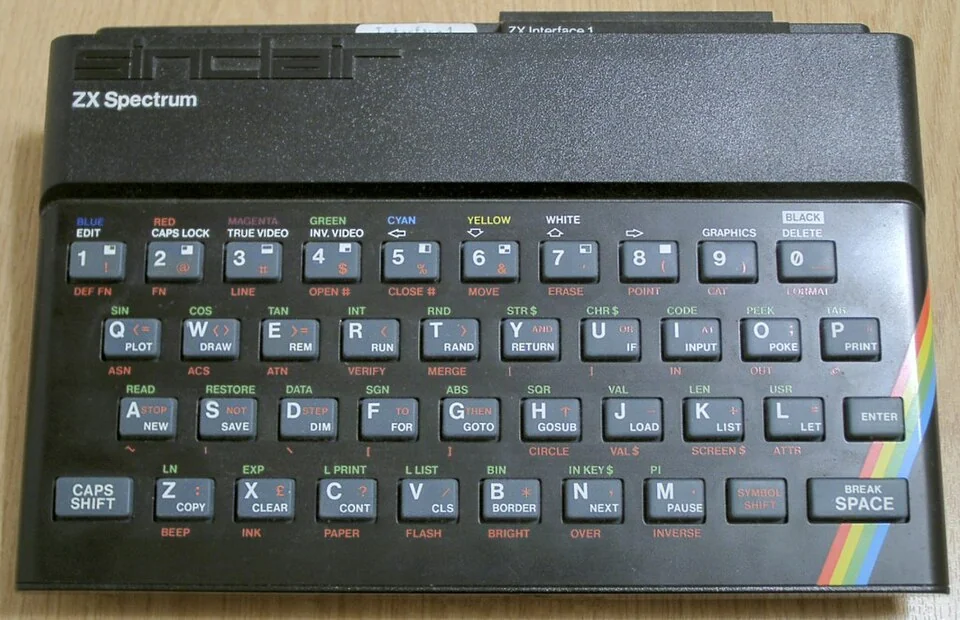
The rainbow stripe promised a livelier world than its monochrome predecessor. Rubber keys, cassette loading and a flourishing game culture gave the Spectrum its own personality.
The story, the ritual & photo credit
A closer look
The original models offered 16 KB or 48 KB of RAM. Colour, sound and more memory opened new possibilities, while the distinctive keyboard kept BASIC commands close at hand.
Remember the feeling?
That loading noise was a small test of faith. A few minutes of waiting could end in a game—or another attempt.
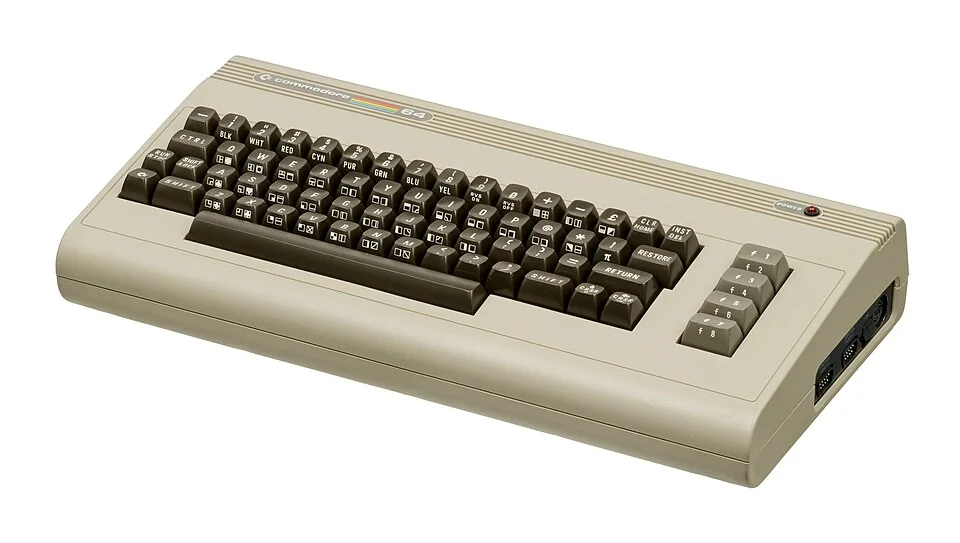
The C64 combined 64 KB of RAM with dedicated graphics and sound hardware. Its SID sound chip gave games and musicians a voice that still inspires electronic music today.
The story, the ritual & photo credit
A closer look
Hardware sprites helped move characters independently of the background. Three synthesizer voices offered surprising expressive range. This was a computer for playing, programming, composing and experimenting.
Remember the feeling?
A cassette deck or a chunky disk drive beside the keyboard: every setup had its own rhythm, its own noises and its own patience requirement.
Photo: Evan-Amos · Public domain. Original & attribution ↗ Resized and converted to WebP; no hardware features altered.
1984computers
21 June 1984 · UK
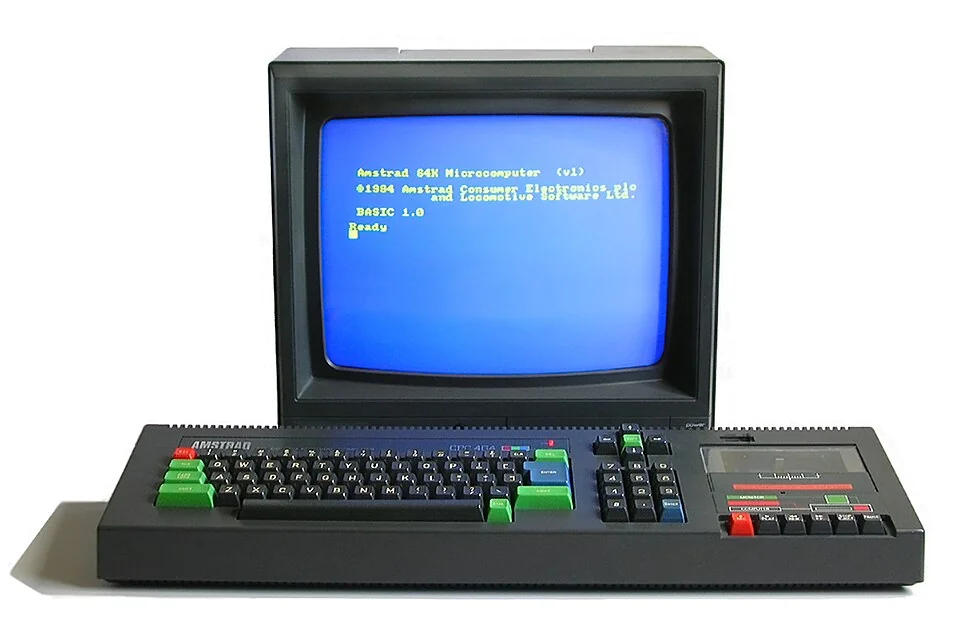
Amstrad / Schneider CPC 464
The tape deck was already built in.
The CPC 464 packaged a computer and cassette recorder into one long keyboard unit, sold with a dedicated monitor. It made the home-computer setup feel like a complete system.
The story, the ritual & photo credit
A closer look
Amstrad’s own history dates the first UK sale to June 1984. The CPC line also reached German-speaking markets under the Schneider name. Later CPC models used disks instead of the built-in tape deck.
Remember the feeling?
Michael remembers a CPC too; the exact model is still being rediscovered. Was it the long keyboard with the cassette deck on the right?
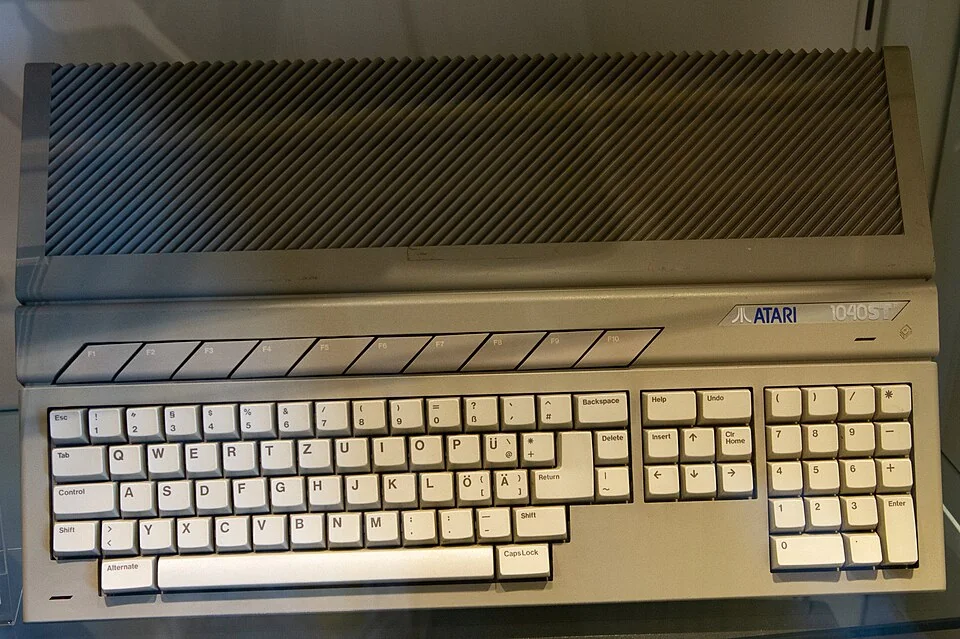
A graphical desktop, mouse control and built-in MIDI ports made the ST a bridge between home computing and creative work. Games were only one part of its appeal.
The story, the ritual & photo credit
A closer look
The family included 520 and 1040 models, with different memory capacities and configurations. The photograph shows a 1040ST, not the original 520ST.
Remember the feeling?
The interesting shift: the same desk could become a games corner, a writing space or a music studio. The computer was becoming a creative instrument.
Photo: Evan-Amos · Public domain. Original & attribution ↗ Resized and converted to WebP; no hardware features altered.
02
1987–1993
More colour. More sound. More possibility.
The Amiga and ST sat alongside the 16-bit console rivalry, while handhelds made games portable. On the PC, getting a game to run could be an education in itself.
1987computers
1987 · home-computer release
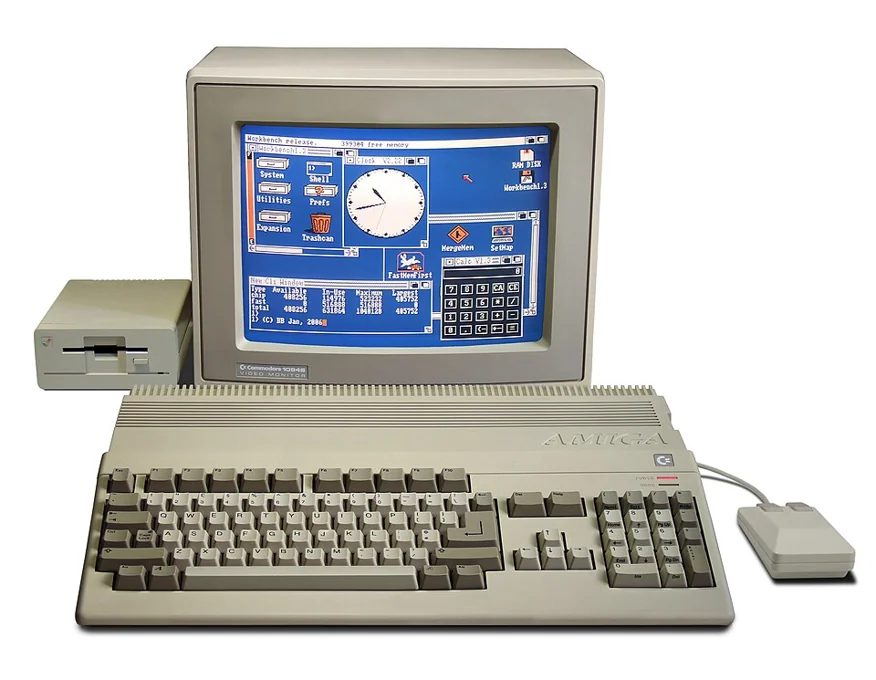
Commodore Amiga 500
Suddenly the computer could perform.
Colourful animation, sampled sound and a multitasking desktop made the Amiga feel like a leap. The A500 put the Amiga’s custom-chip architecture into a keyboard-shaped home machine.
The story, the ritual & photo credit
A closer look
The original Amiga 1000 had arrived in 1985. The A500 made that platform more accessible; artists, musicians and game makers explored what its graphics and audio hardware could do.
Remember the feeling?
Floppy disks on the desk. A mouse in one hand, a joystick nearby. The boundary between playing something and making something felt unusually thin.
Photo: Evan-Amos · Public domain. Original & attribution ↗ Resized and converted to WebP; no hardware features altered.
1989handhelds
1989 Japan and North America · 1990 Europe
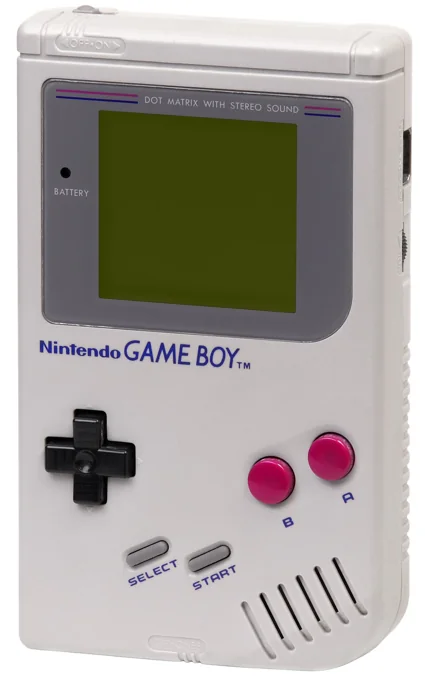
Nintendo Game Boy
Your next level could leave the house.
A small screen and interchangeable cartridges made long journeys a little more interesting. Game Boy built a portable library around familiar Nintendo characters and new favourites.
The story, the ritual & photo credit
A closer look
It was a different kind of freedom: the game no longer depended on claiming the family television. Its compact format made a few spare minutes enough for another attempt.
Remember the feeling?
The ritual: searching for a good light, then negotiating just one more round before putting it away.
Photo: Evan-Amos · Public domain. Original & attribution ↗ Resized and converted to WebP; no hardware features altered.
1990handhelds
1990 Japan · 1991 overseas rollout
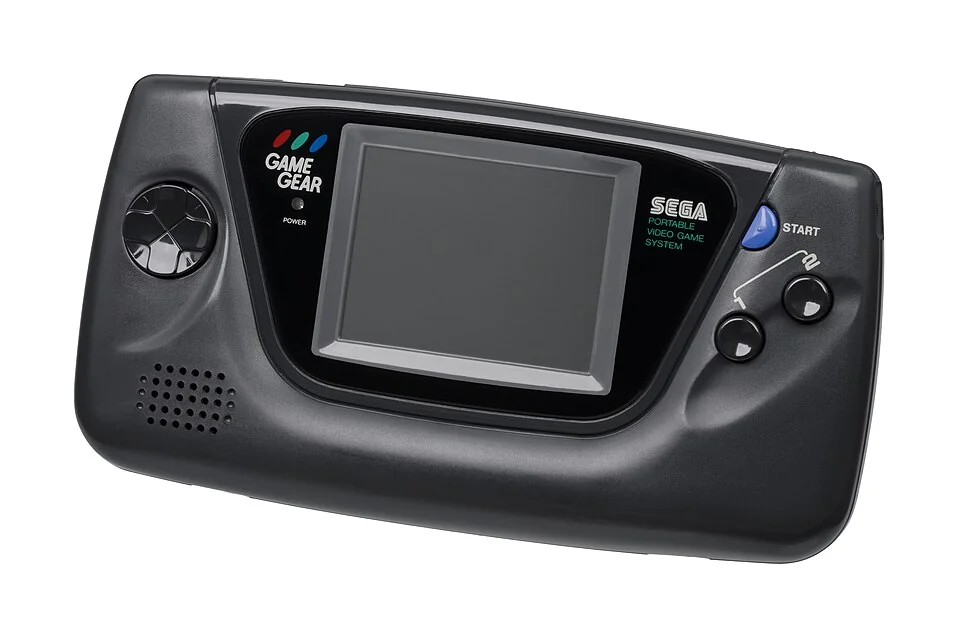
Sega Game Gear
Colour on the move.
A backlit colour screen gave Sega’s handheld a very different look from the Game Boy. Portable hardware now offered competing visions of the future.
The story, the ritual & photo credit
A closer look
An optional TV tuner could turn it into a miniature television. That accessory says a lot about the era: even a games machine could become a pocket-sized window onto broadcast TV.
Remember the feeling?
The question changed from who gets the television to how long the batteries would last.
Photo: Evan-Amos · Public domain. Original & attribution ↗ Resized and converted to WebP; no hardware features altered.
1990consoles
1990 Japan · 1991 North America · 1992 Europe
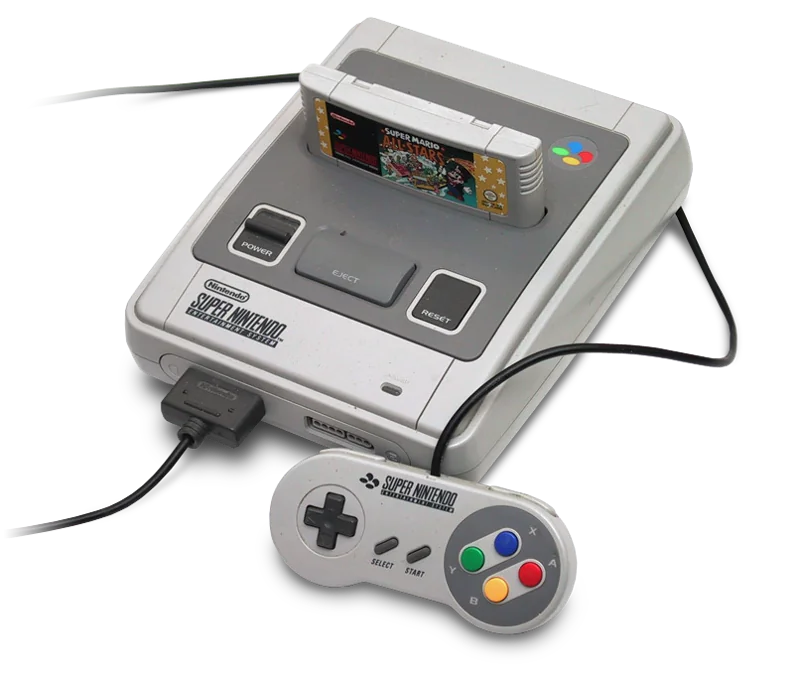
Super Famicom / Super Nintendo
Sprites grew up. Rivalries did too.
Nintendo’s 16-bit generation made colourful worlds, expressive characters and memorable music central to the living-room experience.
The story, the ritual & photo credit
A closer look
The European and Japanese machines had a rounded design; the North American SNES had a squarer shell. The photo here shows the PAL design many European players remember.
Remember the feeling?
The joy was often local: another controller, someone on the sofa and a friendly argument about whose turn came next.
Photo: SNES_800.jpg: Holek
derivative work: AlphathonTM (talk) · CC BY-SA 3.0. Original & attribution ↗ Resized and converted to WebP; no hardware features altered.
1992computers
21 October 1992 · A1200 introduction
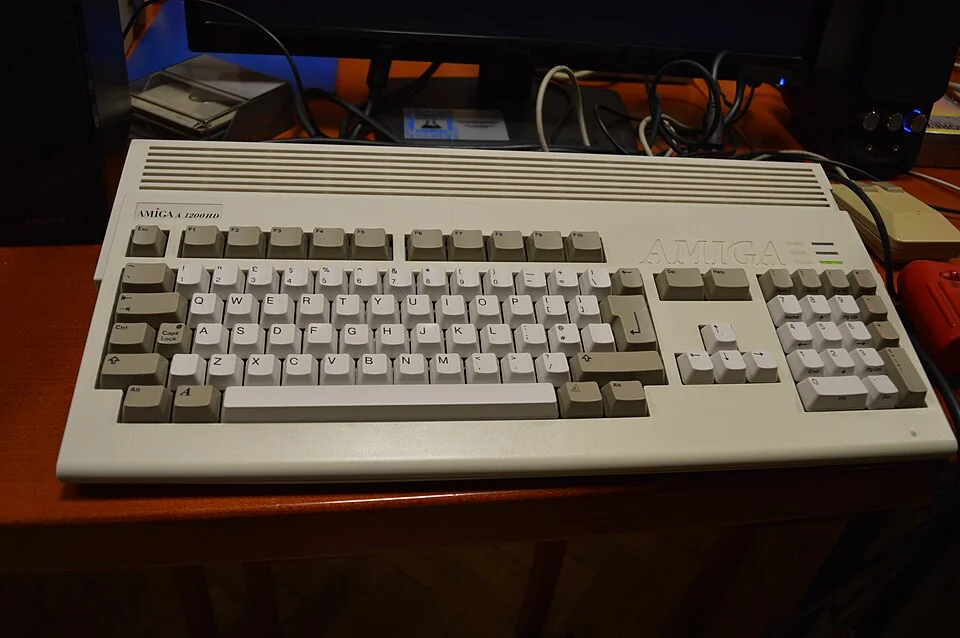
Amiga 1200 & the wider family
The Amiga story kept branching.
The A1200 brought the AGA graphics chipset and a 68020-class processor to the compact Amiga line. It followed years of machines aimed at both home users and more expandable setups.
The story, the ritual & photo credit
A closer look
Along the way came the A2000, A3000, A500 Plus, A600 and A4000. These were different branches of a family, not a simple ladder every owner climbed. The photo shows the A1200.
Remember the feeling?
A familiar name could hide a very different machine. Upgrades meant asking about memory, chipsets and which software would actually run.
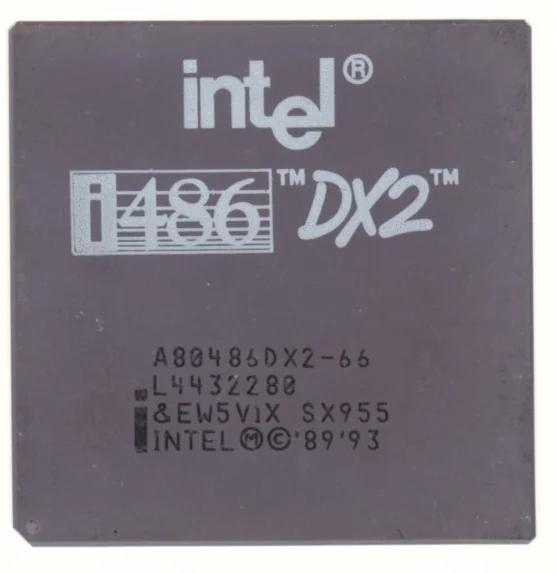
DOS PCs brought another sort of adventure: settings, sound cards, disks and the satisfaction of making a demanding game run properly. Intel’s DX2/66 became an emblem of that period.
The story, the ritual & photo credit
A closer look
The DX2 ran its core at twice the external bus frequency: 66 MHz inside, 33 MHz outside for this model. The photograph shows the processor, not Michael’s original PC. His remembered “DX266” likely refers to this class of machine.
Remember the feeling?
Sometimes the first puzzle came before the title screen: enough memory, the right sound settings and a boot configuration that finally worked.
CDs, polygons and analog movement changed the vocabulary of play. Memory cards carried progress between homes; split-screen multiplayer turned the sofa into an arena.
1994consoles
22 November 1994 · Japan; 1995 overseas
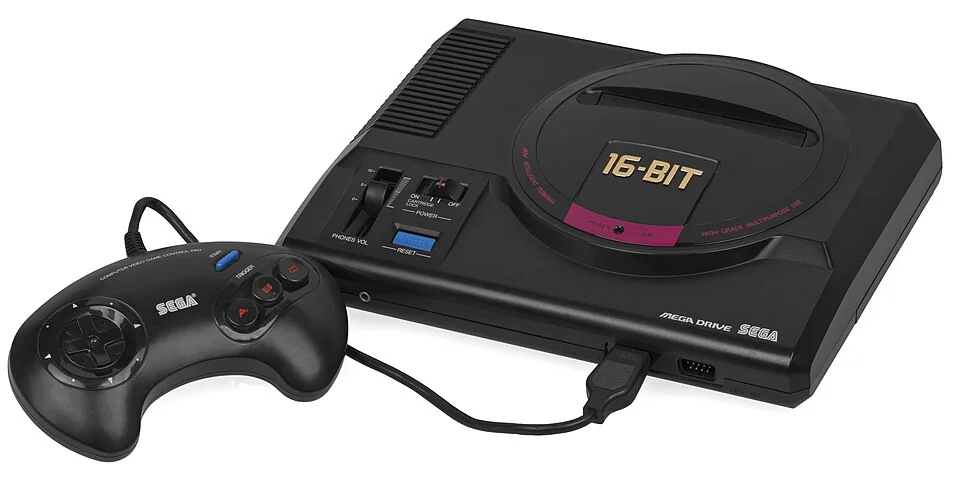
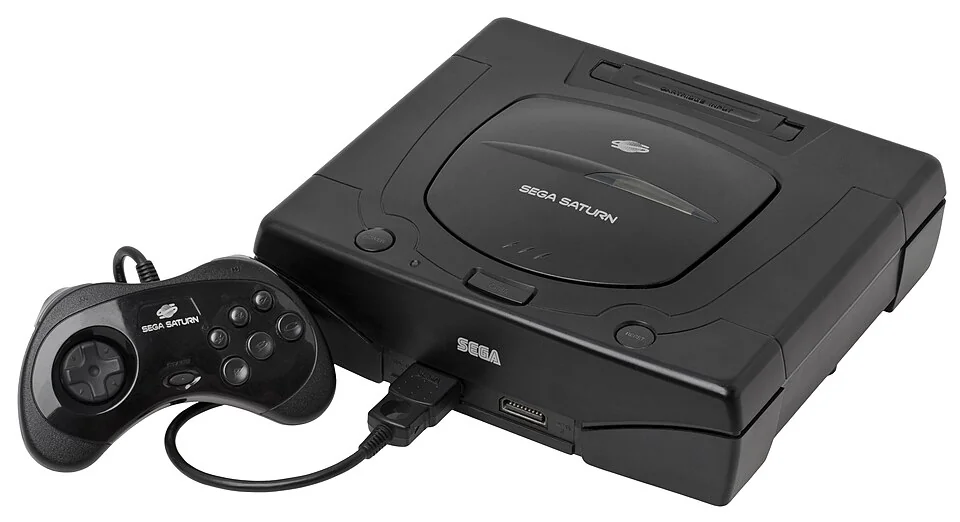
Sega Saturn
Two dimensions meet three.
Sega’s CD-based Saturn straddled elaborate 2D art and the growing appetite for polygonal worlds. It was a complicated machine with a distinctive library.
The story, the ritual & photo credit
A closer look
Its architecture included two SH-2 processors. The story of this generation is not simply that 3D replaced 2D: both styles continued to develop side by side.
Remember the feeling?
The CD case promised a different scale of experience. Loading pauses became part of the bargain.
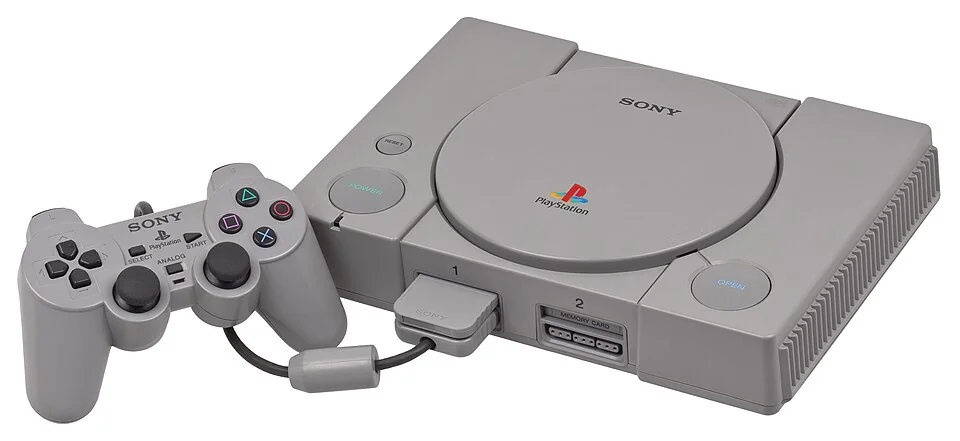
3 December 1994 Japan · September 1995 US and Europe
Sony PlayStation
That startup sound opened a door.
CD storage and real-time 3D helped make the first PlayStation a defining machine of the nineties. New worlds arrived with sharp polygons, ambitious soundtracks and a new visual vocabulary.
The story, the ritual & photo credit
A closer look
The original controller did not have analog sticks. Dual Analog and then DualShock arrived in 1997. The platform evolved after launch, rather than appearing fully formed on day one.
Remember the feeling?
Memory cards made progress something you could carry to a friend’s house. Forgetting one could be more painful than forgetting a controller.
Photo: Evan-Amos · Public domain. Original & attribution ↗ Resized and converted to WebP; no hardware features altered.
1996consoles
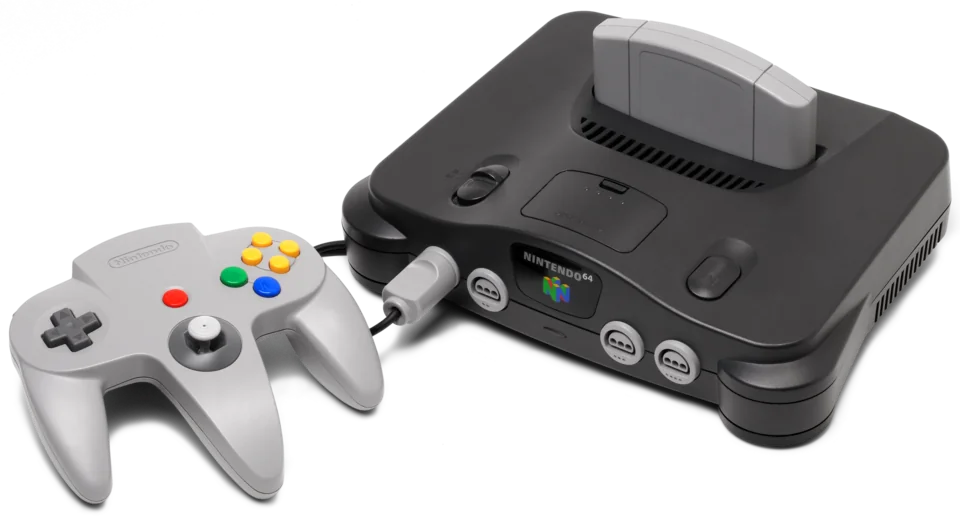
1996 Japan and North America · 1997 Europe
Nintendo 64
Four players. One television.
Nintendo’s cartridge-based 3D console helped turn navigating a world into a new kind of skill. Four controller ports made multiplayer a visible part of the hardware.
The story, the ritual & photo credit
A closer look
Its three-pronged controller looked unusual because it offered different ways to grip it. Analog movement became central to exploring three-dimensional spaces.
Remember the feeling?
The social challenge: concentrate on your quarter of the screen while insisting that nobody else was looking at it.
Photo: Evan-Amos · Public domain. Original & attribution ↗ Resized and converted to WebP; no hardware features altered.
1998consoles
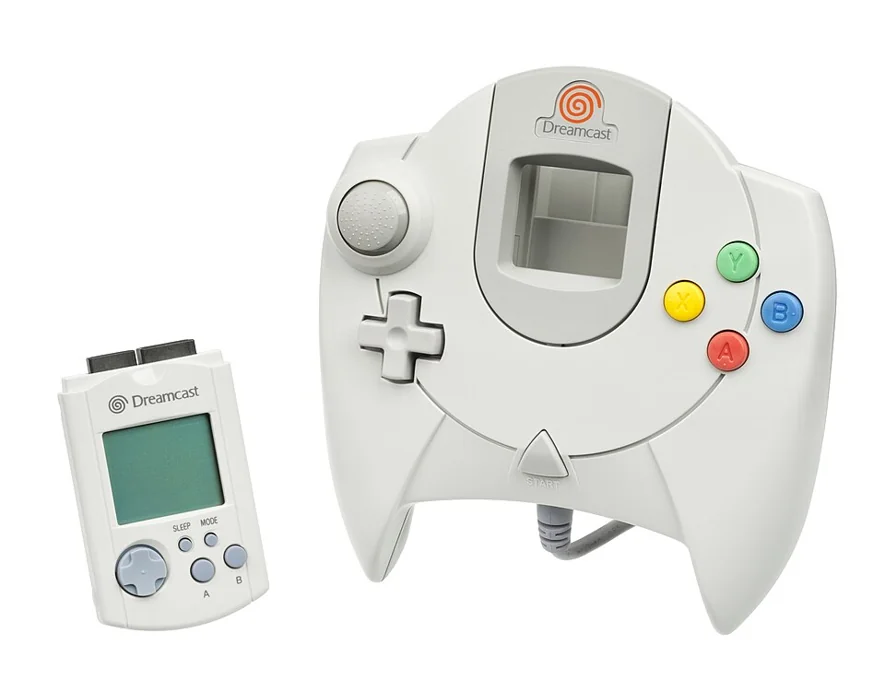
27 November 1998 Japan · 1999 overseas
Sega Dreamcast
A glimpse of the connected future.
Sega’s final home console paired arcade-style experiences with a modem and an unusually inventive controller accessory: the Visual Memory Unit.
The story, the ritual & photo credit
A closer look
The VMU could store saves and display information through the controller window. Away from the controller, compatible software could use it for small standalone experiences.
Remember the feeling?
A memory card with a screen felt wonderfully excessive. Sometimes the accessory told you as much about a company’s ambition as the console itself.
Photo: Evan-Amos · Public domain. Original & attribution ↗ Resized and converted to WebP; no hardware features altered.
2000consoles
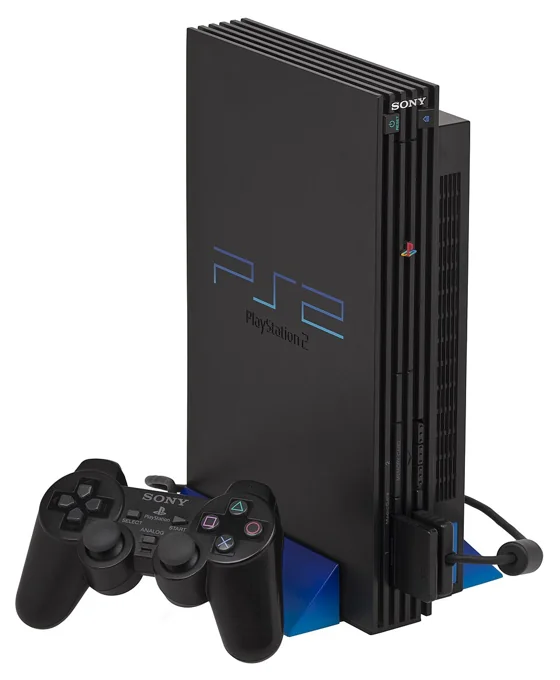
March 2000 Japan · October US · November Europe
Sony PlayStation 2
A games machine—and a DVD player.
The PS2 arrived as living rooms were moving from videotape to DVD. Its disc drive gave it a second role alongside an enormous range of games.
The story, the ritual & photo credit
A closer look
Backward compatibility with original PlayStation games helped connect two generations. A console upgrade did not have to make the old collection immediately irrelevant.
Remember the feeling?
The machine under the television could now be part of movie night as well as game night. Hardware was becoming household infrastructure.
Photo: Evan-Amos · Public domain. Original & attribution ↗ Resized and converted to WebP; no hardware features altered.
04
2001–2006
The living room gets connected.
Consoles competed on more than graphics. Networks, touch screens, portable media and motion control offered very different answers to the same question: what should playing feel like?
2001handhelds
2001 · Japan, North America and Europe
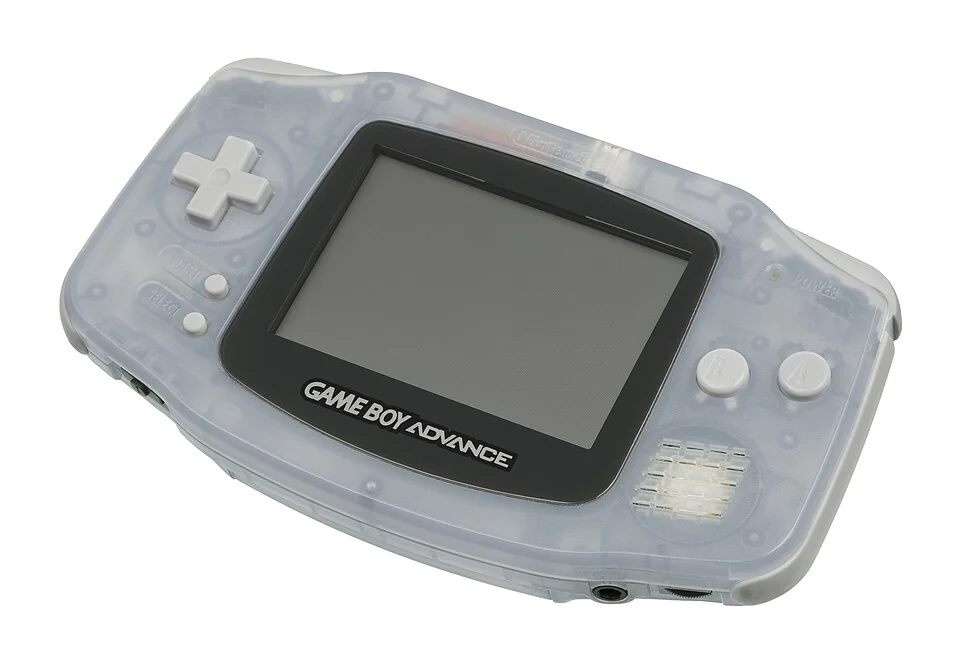
Game Boy Advance
A little console with bigger ambitions.
Nintendo’s next handheld brought a wider screen and a new generation of portable games, while keeping a connection to the Game Boy library.
The story, the ritual & photo credit
A closer look
A cable could link compatible games to the GameCube. The later SP changed the physical experience again with a folding design and built-in lighting.
Remember the feeling?
Portable play has its own nostalgia: the shape of the buttons, the angle of the screen and the place you always sat to catch the light.
Photo: Evan-Amos · Public domain. Original & attribution ↗ Resized and converted to WebP; no hardware features altered.
2001consoles
2001 Japan and North America · 2002 Europe
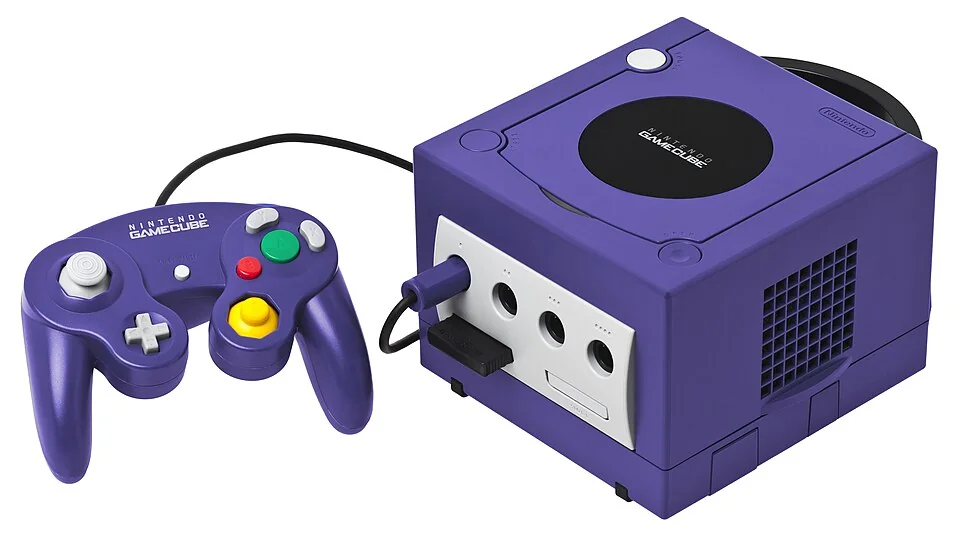
Nintendo GameCube
Small discs. Big personality.
The GameCube used compact optical discs and a controller whose layout made its main action button unmistakable. Its carrying handle gave the hardware a friendly, almost toy-like confidence.
The story, the ritual & photo credit
A closer look
Four controller ports kept local multiplayer close. A small case did not mean small ambitions.
Remember the feeling?
Some machines are remembered as much for their feel as their technical specifications. This is one you can almost hold in your hands again just by looking at it.
Photo: Evan-Amos · Public domain. Original & attribution ↗ Resized and converted to WebP; no hardware features altered.
2001consoles
15 November 2001 · North America; 2002 Europe and Japan
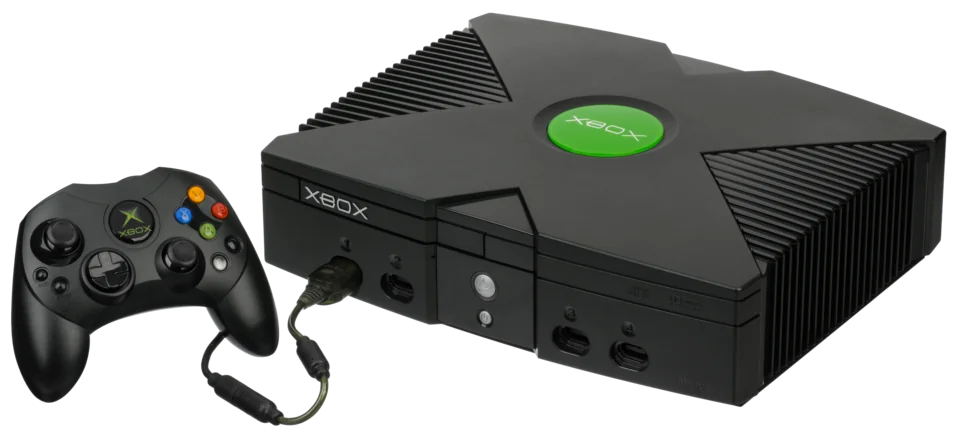
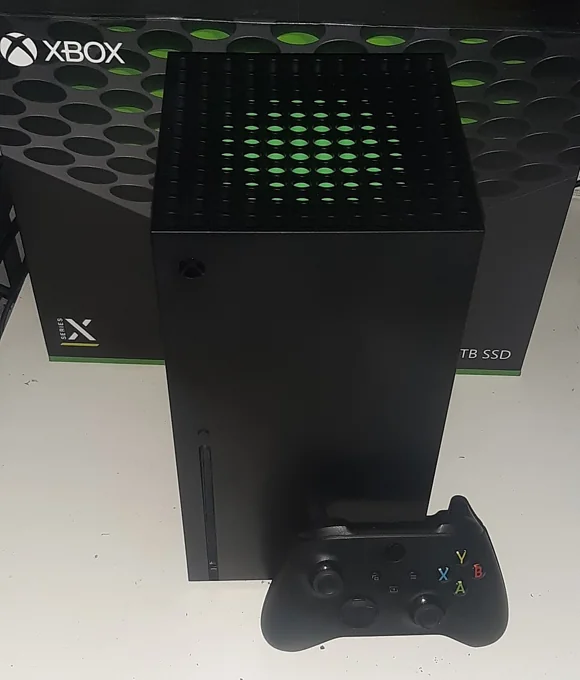
Microsoft Xbox
A new contender enters the room.
Microsoft’s first Xbox brought another platform into the console race. It arrived in North America in November 2001 and expanded internationally the following year.
The story, the ritual & photo credit
A closer look
The original Xbox generation helped make connected console play a central part of the conversation. Halo became closely associated with the platform’s identity.
Remember the feeling?
The era’s social geography widened: from the person beside you to friends connected through a network.
Photo: Evan-Amos · Public domain. Original & attribution ↗ Resized and converted to WebP; no hardware features altered.
2004handhelds
2004 North America and Japan · 2005 Europe
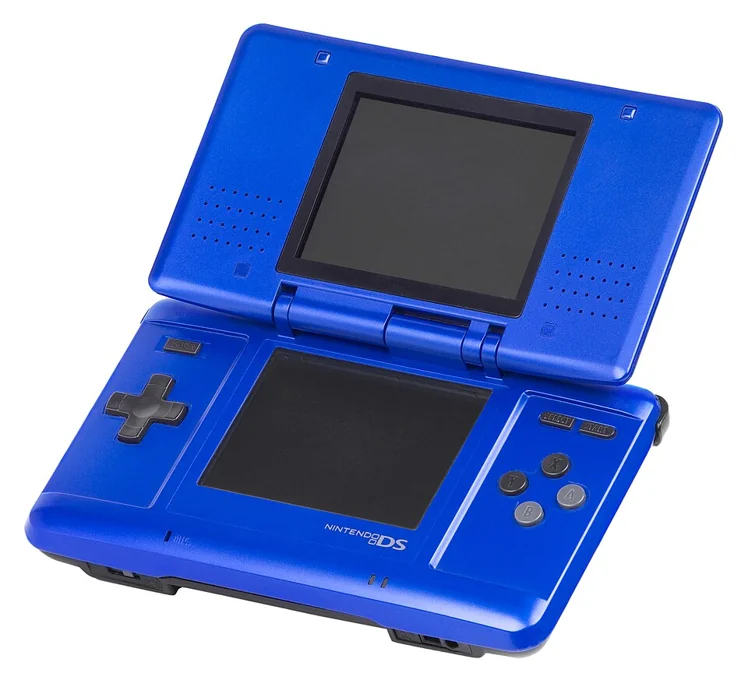
Nintendo DS
The screen became something to touch.
Two displays and a touch screen invited different kinds of interaction. A stylus could replace a button press, point at a clue or make drawing part of play.
The story, the ritual & photo credit
A closer look
Nintendo’s 2004 announcement presented touch input and wireless communication as opportunities for new experiences. It was a change in how to play, not merely how much could fit on screen.
Remember the feeling?
The surprise was that unfamiliar controls could feel immediately understandable. Pointing at something is a skill players already have.
Photo: Evan-Amos · Public domain. Original & attribution ↗ Resized and converted to WebP; no hardware features altered.
2004handhelds
2004 Japan · 2005 North America and Europe
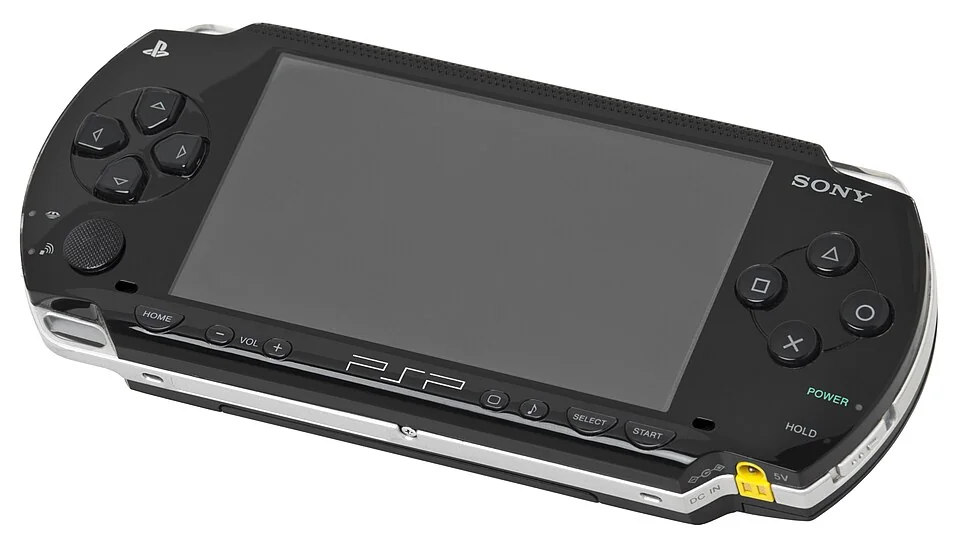
PlayStation Portable
PlayStation leaves the living room.
The PSP combined a wide display with games, music and video ambitions. Sony gave portable play a distinctly different feel from Nintendo’s touch-focused approach.
The story, the ritual & photo credit
A closer look
Its UMD optical discs were enclosed in small protective shells. Physical media had found another memorable shape.
Remember the feeling?
Pocket-sized was always a relative term. But taking that kind of screen and game presentation away from the television felt like progress you could hold.
Photo: Evan-Amos · Public domain. Original & attribution ↗ Resized and converted to WebP; no hardware features altered.
2005consoles
22 November 2005 North America · December Europe and Japan
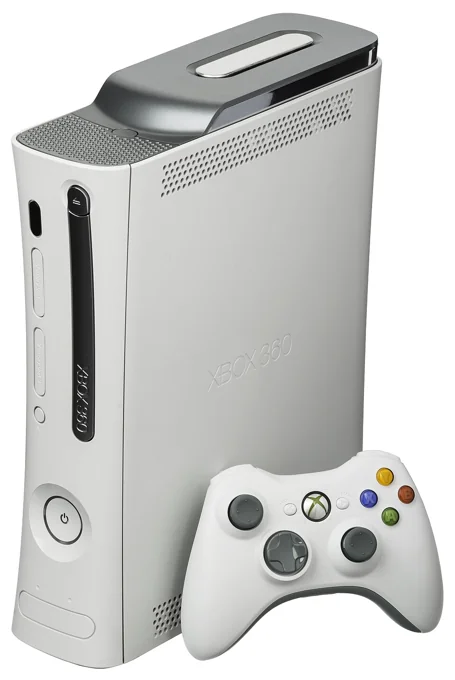
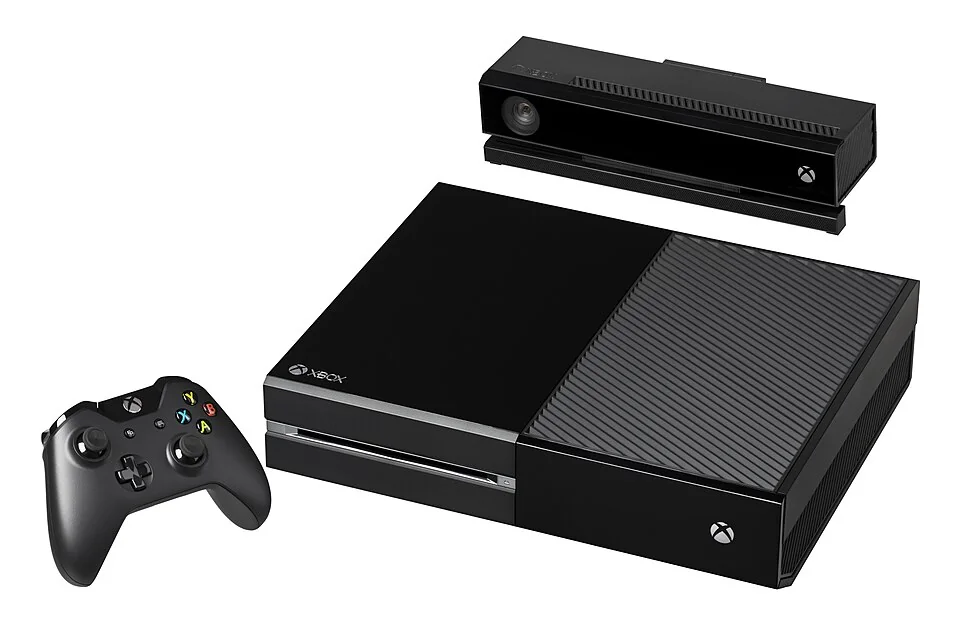
Xbox 360
The console becomes a social place.
The Xbox 360 generation brought high-definition presentation, downloadable games and persistent player identities further into everyday console life.
The story, the ritual & photo credit
A closer look
Microsoft’s launch account describes consoles arriving by truck at its Zero Hour event. The anticipation around new hardware had become an event of its own.
Remember the feeling?
The competition no longer ended when the console switched off. Friends could compare what they had played and what they had achieved.
Photo: Evan-Amos · Public domain. Original & attribution ↗ Resized and converted to WebP; no hardware features altered.
2006consoles
November 2006 Japan and North America · March 2007 Europe
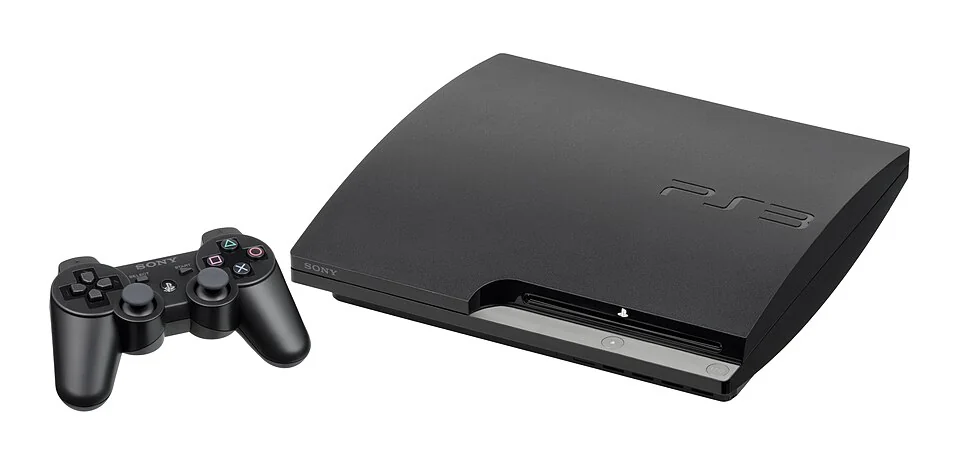
PlayStation 3
The high-definition living room.
Blu-ray, an internal hard drive and network features made PS3 much more than a disc-based game player. Its generation expanded what a console could store and deliver.
The story, the ritual & photo credit
A closer look
The Sixaxis controller introduced motion sensing; DualShock 3 later brought vibration back. Even the familiar controller kept changing.
Remember the feeling?
This was a period of downloads, updates and growing digital libraries. Turning on a console no longer always meant starting the game immediately.
Photo: Evan-Amos · Public domain. Original & attribution ↗ Resized and converted to WebP; no hardware features altered.
2006consoles
2006 · November/December regional launches
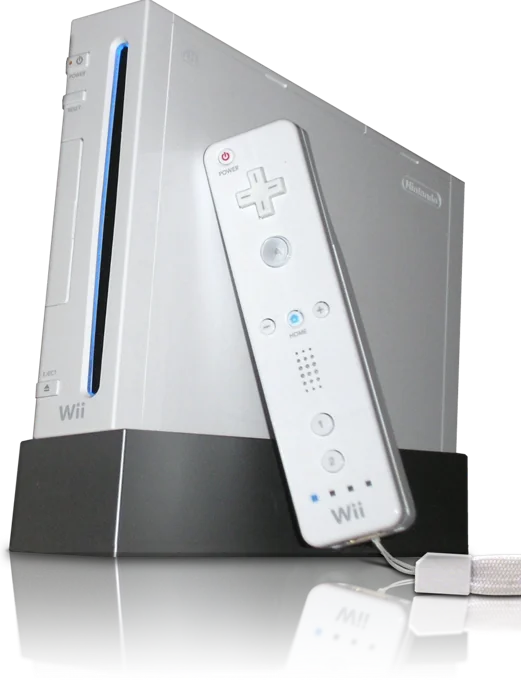
Nintendo Wii
Stand up. Take a swing.
Wii’s motion-sensitive controller made physical gestures part of the game. Wii Sports turned familiar activities into approachable shared play.
The story, the ritual & photo credit
A closer look
Tennis, bowling and other sports helped explain the controls through the activity itself. The appeal was easy to demonstrate to someone who did not consider themselves a gamer.
Remember the feeling?
The wonderful reversal: the person least interested in traditional controllers might suddenly be the most competitive person in the room.
Second screens, sharing, hybrid hardware and faster storage changed where a game could fit into life. The newest machines still owe something to that first urge to press a button and explore.
2012consoles
2012 · Europe on 30 November
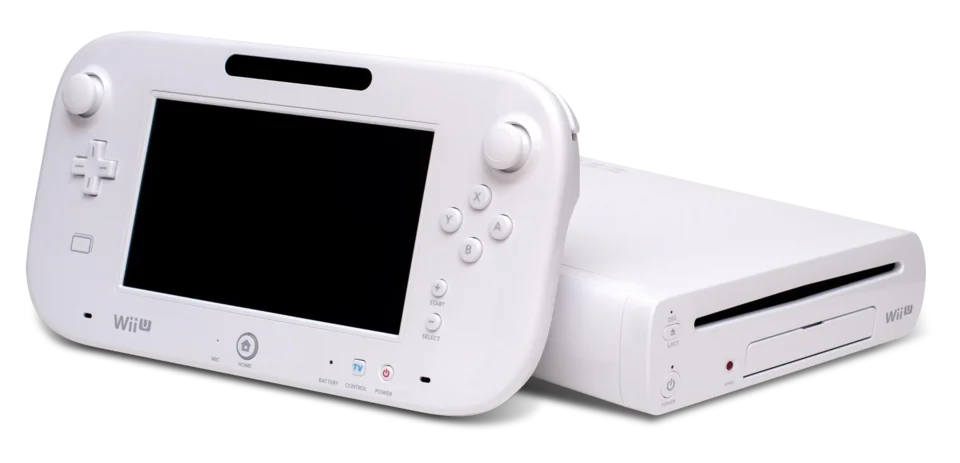
Nintendo Wii U
One room, two viewpoints.
The Wii U GamePad added a touch screen to the controller. It opened the door to off-TV play and games where players did not all see the same information.
The story, the ritual & photo credit
A closer look
It was a separate console generation, despite the familiar Wii name. Its GamePad experimented with what a second screen could contribute to a shared game.
Remember the feeling?
A compelling idea: the person holding the GamePad might know something everyone watching the television did not.
Photo: Evan-Amos · Public domain. Original & attribution ↗ Resized and converted to WebP; no hardware features altered.
2017consoles
3 March 2017 · worldwide launch
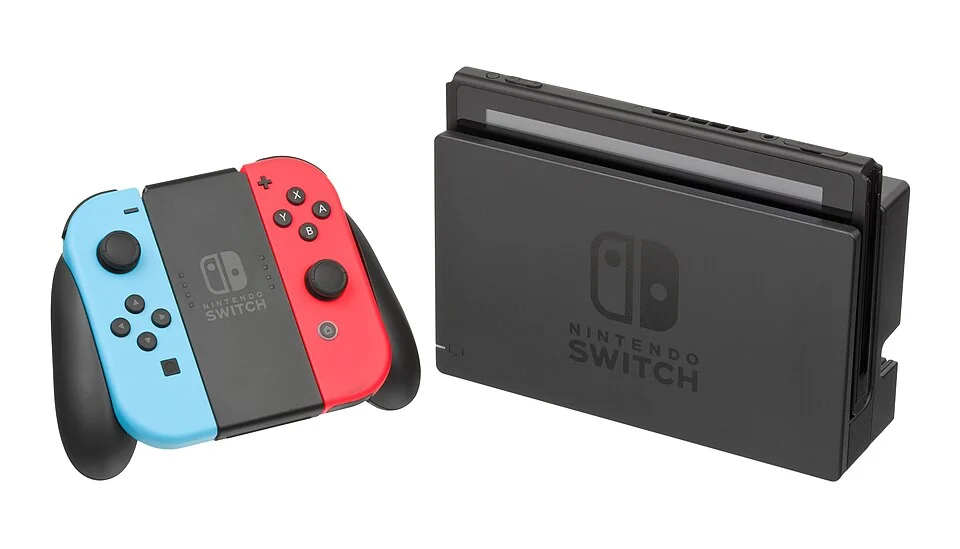
Nintendo Switch
The game comes with you.
Switch joined TV play and handheld play in one system. Detachable Joy-Con controllers made changing the setup part of its identity.
The story, the ritual & photo credit
A closer look
The original dockable Switch can move between television, tabletop and handheld use. Switch Lite later focused on handheld play; the OLED model changed the display and other details.
Remember the feeling?
The important change was continuity: leaving the television did not have to mean leaving the game behind.
12 November 2020 first markets · 19 November Europe
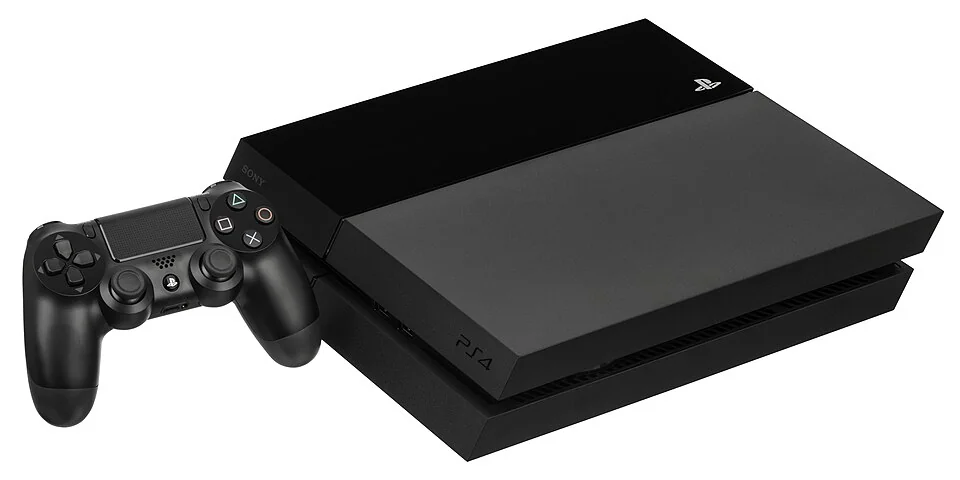
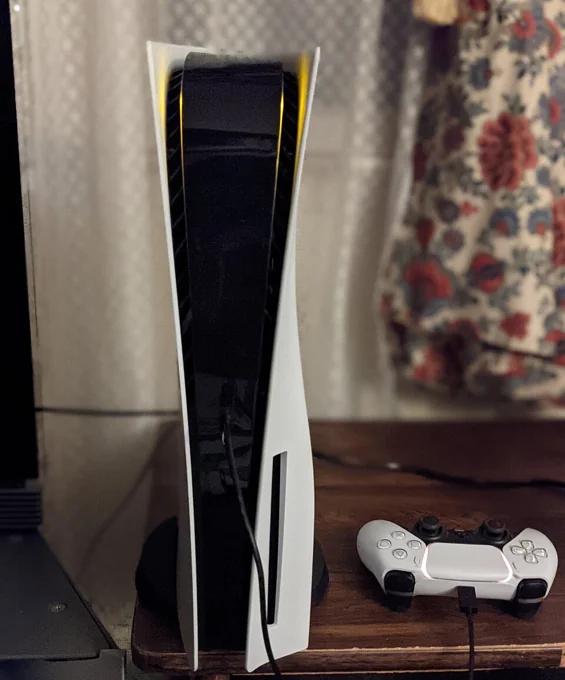
PlayStation 5
The next generation is something you feel.
Fast SSD storage changes loading; DualSense adds detailed haptic feedback and adaptive triggers. The ambition reaches beyond what the screen can show.
The story, the ritual & photo credit
A closer look
In supported games, resistance in a trigger or a changing vibration pattern becomes another channel of feedback. The controller participates in explaining the world.
Remember the feeling?
From a rubber keyboard to a controller that pushes back: the technology changes, but the invitation is familiar. Try something. See what happens.